Description
Searching for a sideboard in South Africa? This complete guide covers types, sizes, costs, and styling tips, so you find the right piece for your dining room or lounge. Shop sideboards for sale at Click Furniture with free nationwide delivery.
Sideboards in South Africa
A sideboard is one of those furniture pieces that earns its keep in multiple rooms. It stores dining room essentials, acts as a serving surface during dinner parties, and doubles as a statement piece in a lounge or entrance hall. If you are looking for a sideboard in South Africa, this guide helps you choose the right style, size, and finish for your home.
TLDR
- A sideboard is a low, wide storage cabinet designed for dining rooms and lounges, with a mix of drawers and cupboard doors.
- In South Africa, sideboards come in wooden, modern, mid-century, and floating wall-mounted styles, starting from around R2,500.
- The right sideboard width sits between two-thirds and three-quarters of your dining table length.
- Click Furniture stocks a curated range of sideboards and buffet cabinets with free delivery nationwide and buy-now-pay-later available.
What Is a Sideboard and What Is It Used For
A sideboard is a long, low-standing cabinet that combines drawer storage with cupboard space. Most sideboards sit between 75 cm and 90 cm tall, making the top surface the right height for serving food, displaying decor, or housing a drinks tray.
Traditionally, the sideboard sat in the dining room and stored table linen, serving dishes, cutlery, and wine glasses. Today, South Africans use sideboards in lounges, home offices, entrance halls, and even bedrooms as a stylish alternative to a standard chest of drawers.
The top surface is as important as the storage inside. A well-chosen sideboard gives you a place to put a table lamp, a vase of flowers, framed photos, or a drinks station, turning an ordinary wall into a focal point.
Sideboard vs Buffet vs Console Table
These three pieces look similar on a retailer's website but serve different purposes in your home.
Sideboard. A sideboard is a fully enclosed storage cabinet, typically 150 to 200 cm wide and 40 to 45 cm deep. It has a combination of drawers and hinged doors. The depth is enough to store plates standing upright and serving bowls stacked inside. Sideboards suit dining rooms and lounges where substantial storage is the priority.
Buffet cabinet. A buffet is essentially a sideboard with a larger surface area, designed for food service. Buffets tend to be slightly lower than sideboards, which makes the top easier to load and unload during meals. In South Africa, the terms sideboard and buffet cabinet are used interchangeably in most furniture stores.
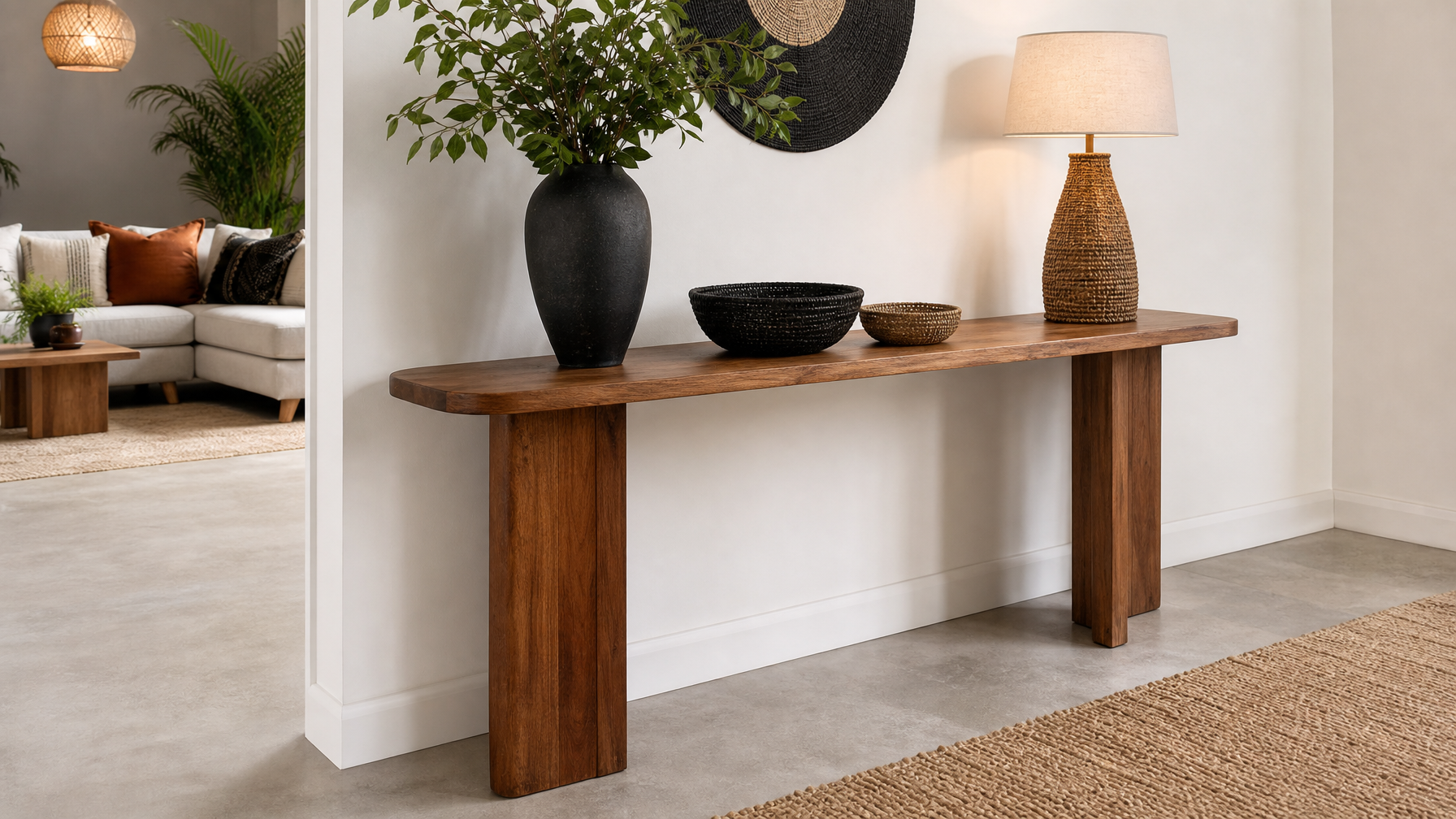
Console table. A console table is narrower (typically 25 to 35 cm deep), has no enclosed storage (or very minimal storage), and sits against a wall or behind a sofa. A console table is decorative first and functional second. If you need real storage capacity, a sideboard is the better choice. If you need something slim that fills a wall without bulk, the console table wins.
The simplest way to decide: if you need to store things inside it, choose a sideboard. If you just need a surface and a slim profile, choose a console table.
Types of Sideboards Available in South Africa
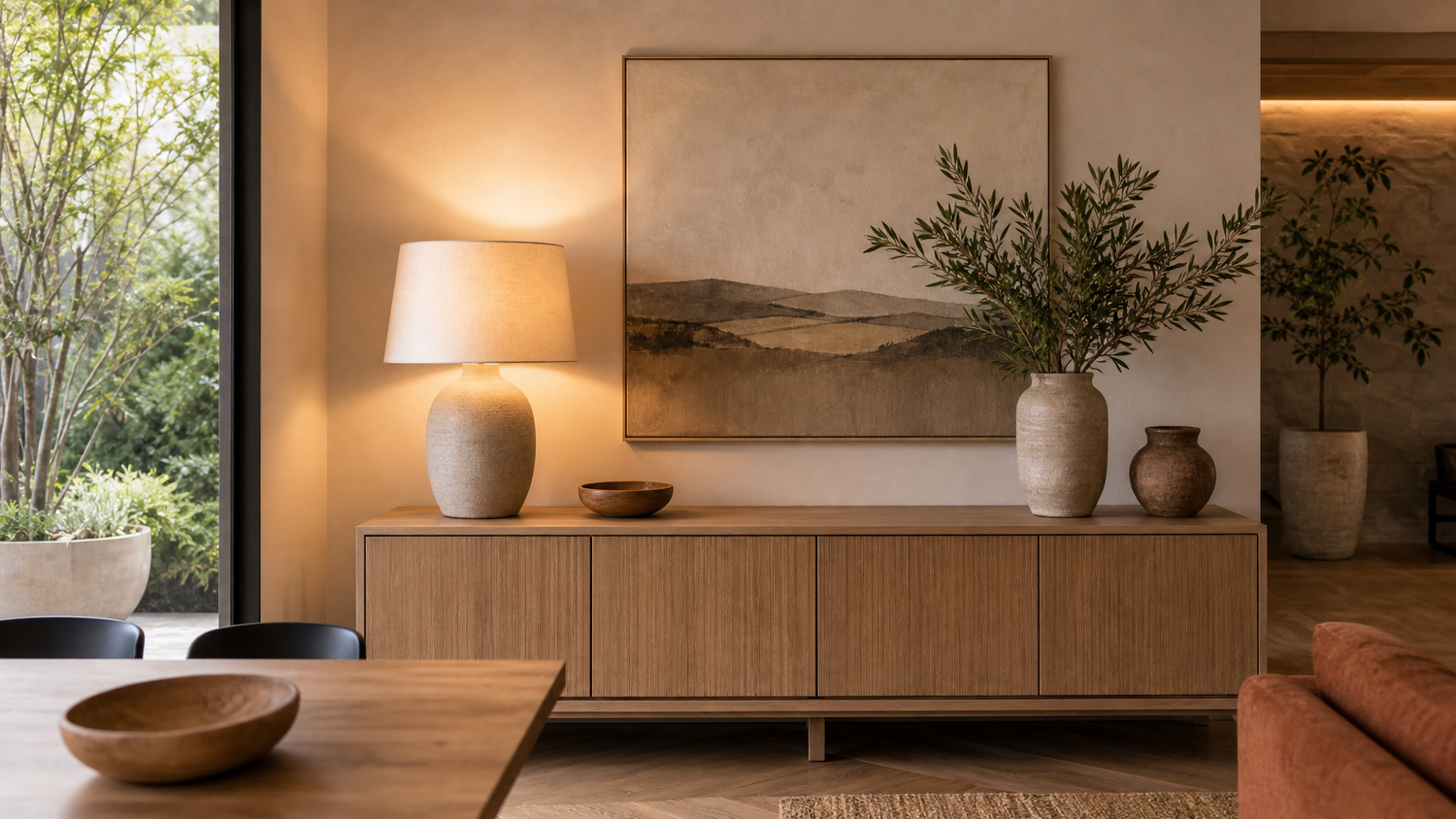
Wooden sideboards. Solid wood and wood-veneer sideboards suit homes with warm, natural colour palettes. Light oak and pine tones are popular in South African homes with open-plan layouts and lots of natural light. Dark walnut finishes suit more formal dining rooms.
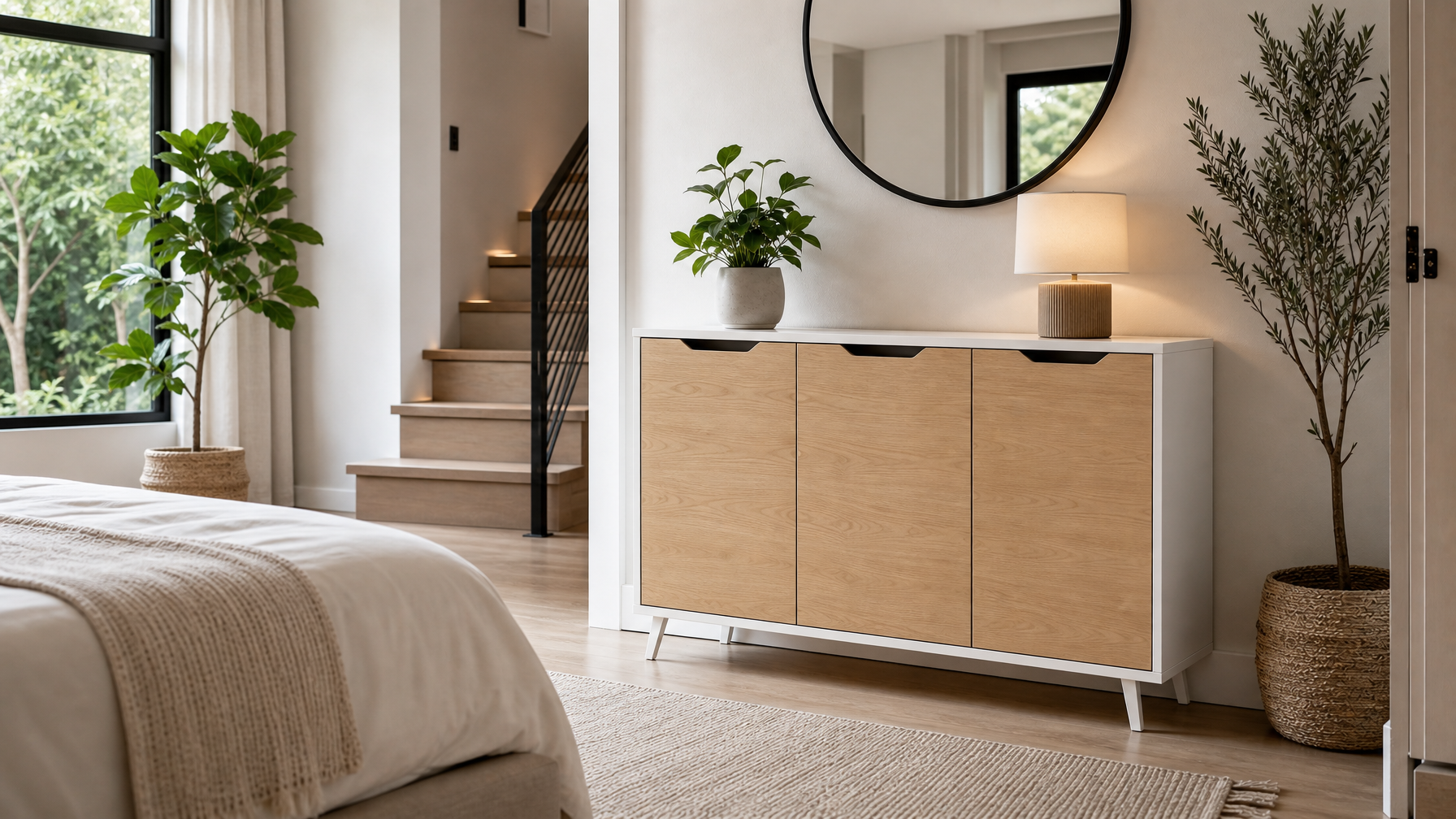
Modern sideboards. Clean lines, minimal hardware, and smooth finishes define the modern sideboard. These units often come in white, grey, or concrete-look finishes and pair well with contemporary dining sets. Push-to-open doors replace visible handles for a seamless look.
Mid-century modern sideboards. Tapered legs, flat fronts, and warm wood tones characterise the mid-century style. This style has maintained its popularity in South Africa because it works in both older homes with wooden floors and newer open-plan spaces. Mid-century sideboards often feature cane or rattan door inserts, adding texture to an otherwise flat surface.
Floating (wall-mounted) sideboards. A wall-mounted sideboard attaches directly to the wall, keeping the floor clear beneath it. This works well in compact dining rooms and apartments where floor space is limited. The floating look also makes cleaning easier. Wall-mounted units require proper wall anchoring, so check that your walls can handle the weight before you buy.
How to Size a Sideboard for Your Dining Room or Lounge
The most common sizing mistake is buying a sideboard that looks fine in a showroom but shrinks or overwhelms a room at home.
Width. The standard rule is to choose a sideboard that sits between two-thirds and three-quarters of your dining table length. For a 180 cm dining table, that means a sideboard of roughly 120 to 135 cm wide. For a lounge wall, measure the available wall width and leave at least 30 to 40 cm of space on either side to avoid a boxed-in feel.
Height. Most sideboards sit between 75 cm and 90 cm tall. For a dining room, aim for a height that puts the top surface at the same level or slightly below the dining table surface. This makes serving from the sideboard comfortable.
Depth. Standard depth is 40 to 45 cm. Any shallower and the storage becomes impractical. Leave at least 90 cm of clearance between the sideboard and the dining chairs opposite so people can move comfortably.
How Much Does a Sideboard Cost in South Africa
Sideboard prices in South Africa vary based on size, material, and finish. Here is what to expect.
- Entry-level (MDF, 120 to 150 cm wide): R2,500 to R5,000
- Mid-range (engineered wood, wood veneer, or solid pine, 150 to 180 cm): R5,000 to R9,000
- Premium (solid hardwood, designer finishes, or imported): R9,000 to R16,000+
Click Furniture's sideboard range sits within the entry to mid-range bracket, covering the most popular sizes and finishes. Free delivery is included on all orders, and buy-now-pay-later lets you split the cost over two months.
Where to Put a Sideboard in Your Home
Dining room. This is the sideboard's natural home. Place it on the wall opposite the dining table, or along the wall beside the table. It stores your dining essentials and provides a serving surface just steps away from seated guests.
Lounge. A sideboard in a lounge serves as a TV stand alternative, a bar cabinet, or simply a storage piece with styling space on top. Pair it with artwork or a large mirror above for a finished look.
Entrance hall. A sideboard in an entrance hall welcomes guests and stores keys, mail, sunglasses, and everyday items. Choose a floating style here to keep the entryway feeling open.
Home office. A sideboard in a home office stores documents, stationery, and electronics. The low height means it does not block natural light from windows and keeps the room feeling open.
Shop Sideboards at Click Furniture
Click Furniture stocks a full range of sideboards in South Africa across multiple finishes and sizes, with free nationwide delivery on every order. All sideboards arrive flat-packed with assembly instructions, and buy-now-pay-later is available so you can furnish your home today and spread the cost over two months.
If you are also refreshing your dining space, browse the full dining room collection to find a dining table, chairs, and storage pieces that coordinate. Prices start at R1,095.
Frequently Asked Questions
What is the difference between a sideboard and a buffet in South Africa? Very little, in practical terms. A buffet was originally designed specifically for food service, sitting slightly lower for easier access during meals. A sideboard is the broader category. Most South African furniture retailers use the terms interchangeably, and the pieces they sell typically serve both purposes.
How deep should a sideboard be? A standard sideboard depth is 40 to 45 cm. This is enough to store dinner plates standing upright, serving bowls, or a row of wine bottles on their sides. Anything shallower limits what you can actually fit inside.
Can you use a sideboard as a TV stand? Yes. A sideboard works well as a TV stand in lounges where you want more storage than a standard TV unit provides. Check that the surface is deep enough (at least 40 cm) and wide enough for your screen with space on either side. A floating wall sideboard at the right height can also create a very clean, modern media wall look.
What is the standard height for a sideboard? Most sideboards sit between 75 cm and 90 cm tall. This puts the top surface at a comfortable working and serving height for most adults and keeps the top below eye level when seated, so it does not dominate the room.
What do you put on top of a sideboard? The top of a sideboard suits a lamp (table lamp or a pair of them), a large vase or plant, decorative objects at varying heights, framed photos or artwork, a drinks tray, or a combination of all of these. Keep the arrangement balanced but not rigid, and leave some surface clear for practical use.
Do sideboards come assembled or flat-packed in South Africa? Most sideboards sold online in South Africa arrive flat-packed. Assembly is straightforward with the included instructions and typically takes 30 to 60 minutes. Some retailers offer an assembly service for an additional fee.