TLDR
- South African homes need cupboards that handle heat, humidity and dust - material choice matters.
- Freestanding cupboards start from around R1,500; built-in units cost R4,400 to R20,000+ per linear metre.
- Melamine (particleboard) is the most practical and popular material for SA homes.
- Renters and movers: go freestanding. Owners with permanent homes: built-in adds more value.
- Sliding doors save floor space; hinged doors give full access.
- A standard bedroom cupboard needs at least 600mm depth and enough hanging length for your wardrobe.
- Going vertical is the single best storage hack for small South African homes.
Table of Contents
- What types of cupboards are available in South Africa?
- How much do cupboards cost in South Africa?
- What is the best material for a cupboard in South Africa?
- Built-in vs freestanding: which is better for South African homes?
- Sliding door vs hinged door: which should you choose?
- What size cupboard do you need for your bedroom?
- How do you maximise storage in a small South African home?
- Do cupboards add value to your property?
- Shop Click Furniture's Cupboard Range
Introduction
Walk into almost any South African home and you'll find the same challenge: not enough storage, not enough space, and a lot of stuff to put somewhere. Whether you're moving into a new apartment in Cape Town, settling into a suburban home in Johannesburg, or finally sorting out that cluttered back bedroom, choosing the right cupboard is one of the most practical home decisions you'll make.
The problem is the options are overwhelming. Built-in or freestanding? Melamine or solid wood? Sliding doors or hinged? R1,500 or R15,000? This guide answers all of it, drawing on current South African pricing data, local property experts, and practical advice that actually applies to how we live here.
What Types of Cupboards Are Available in South Africa?
South Africa's cupboard market broadly divides into four categories:
1. Bedroom Wardrobes
These are the classics: tall, deep units designed for clothing. They come as freestanding pieces (flat-pack or assembled) or as built-in wardrobes fitted wall-to-wall. Standard sizes run from 2-door to 6-door configurations.
2. Kitchen Cupboards
Kitchen units fall into floor (base) units and wall (overhead) units. Floor units carry the bulk of storage and sit under counters; wall units store lighter items like plates, glasses and pantry staples. Modular kitchen cupboard systems let you mix and match widths - typically 300mm, 450mm, 600mm, 800mm and 1200mm wide.
3. Storage Cupboards and Multi-Purpose Cabinets
These are the workhorses: tall, versatile units that work in laundries, garages, offices, bathrooms and living areas. A good storage cupboard - like the Bath51 Storage Cupboard from Click Furniture - offers 178cm of height with multiple adjustable shelves, making it ideal for everything from cleaning products to linen.
4. Bathroom and Linen Cupboards
Shallower and often narrower, these units focus on accessibility over volume. Moisture resistance is a key factor here, making material choice especially important.
How Much Do Cupboards Cost in South Africa?
Cupboard prices in South Africa cover a very wide range, and the gap between freestanding and built-in is significant.
Freestanding Cupboards
- Basic 2-door kitchen unit: from R1,500 to R2,500
- Multi-purpose tall storage cabinet: R2,000 to R3,500
- Standard 2-door freestanding wardrobe: R1,650 to R3,500
- Premium freestanding units: R4,000 to R8,000
Built-in Cupboards
- Basic built-in (melamine, standard design): from R4,400 per linear metre
- Mid-range built-in (custom design, quality hardware): R8,000 to R12,000 per linear metre
- Premium built-in (solid wood, high-spec hardware): up to R20,000 per linear metre
Labour and installation typically add 10-15% on top of material costs.
What Drives the Price?
- Size: more linear metres = higher cost
- Material: melamine is cheapest; solid wood and lacquered MDF cost more
- Design complexity: standard rectangular units are cheap; L-shapes, corner units and custom inserts add cost
- Hardware: soft-close hinges, pull-out drawers and organiser inserts all add to the bill
For most South African homeowners on a practical budget, a well-chosen freestanding unit from a reliable retailer delivers real value without contractor quotes and waiting time.
What Is the Best Material for a Cupboard in South Africa?
Material choice is where a lot of South Africans go wrong. The country's climate - heat, humidity swings, and dust - makes some materials perform far better than others long-term.
Melamine (Particleboard / Chipboard)
This is the most widely used material for cupboards across South Africa. Melamine is particleboard laminated with a thermally fused resin coating, making it scratch-resistant, stain-resistant and easy to wipe clean. It handles temperature variation well and comes in a huge range of colours and finishes - from plain white to realistic woodgrain effects.
Cost: affordable. Durability: very good for everyday use. Best for: kitchens, bedrooms, offices, storage.
MDP (Medium Density Particleboard)
Similar to chipboard but denser. Most flat-pack furniture in SA - including quality storage cabinets - uses 15mm or 18mm MDP. It's strong enough for shelving loads, lighter than solid wood and far cheaper.
MDF (Medium Density Fibreboard)
Smoother than particleboard and ideal for painted finishes and routed door profiles. MDF is often used for cupboard doors rather than carcasses. It's heavier and slightly more moisture-sensitive, so avoid it in wet areas without proper sealing.
Solid Wood
Premium, beautiful and expensive. Solid wood handles South Africa's climate reasonably well if properly sealed and maintained, but it's overkill for most storage applications. It adds genuine visual warmth to a bedroom but at 3-4 times the price of melamine.
Which to Choose?
For most South African homes: 15mm or 18mm melamine/MDP for the carcass, with MDF doors if you want a painted or detailed look. It's the combination that balances cost, durability and aesthetics.
Built-in vs Freestanding: Which Is Better for South African Homes?
This is the question most South Africans wrestle with. The honest answer: it depends on whether you own or rent, and how long you plan to stay.
Built-in Cupboards
Advantages:
- Maximises every centimetre of wall space, including awkward nooks and alcoves
- Creates a seamless, tailored look that increases the home's perceived value
- Stays put and becomes part of the home's structure
- No gaps for dust to accumulate underneath or at the sides
Disadvantages:
- Significantly higher upfront cost (R4,400+ per linear metre)
- Requires a carpenter or installer
- You can't take it with you when you move
- Damage is harder to repair
Freestanding Cupboards
Advantages:
- Move it when you move house - it's yours to keep
- No installation costs or waiting on contractors
- Wide range of prices from R1,500 upward
- Ideal for renters
- Can be replaced or upgraded easily
Disadvantages:
- Gaps at sides and top where dust collects
- Limited to standard sizes - no filling awkward corners
- Can look less polished in a premium home context
The verdict for South Africa: Renters, young professionals and those in starter homes - freestanding is the smarter buy. Established homeowners who plan to stay put will see better returns from a built-in installation. Many South Africans take a hybrid approach: built-in kitchen and bedroom cupboards, with quality freestanding storage units elsewhere in the home for flexibility.
Sliding Door vs Hinged Door: Which Should You Choose?
Sliding Doors
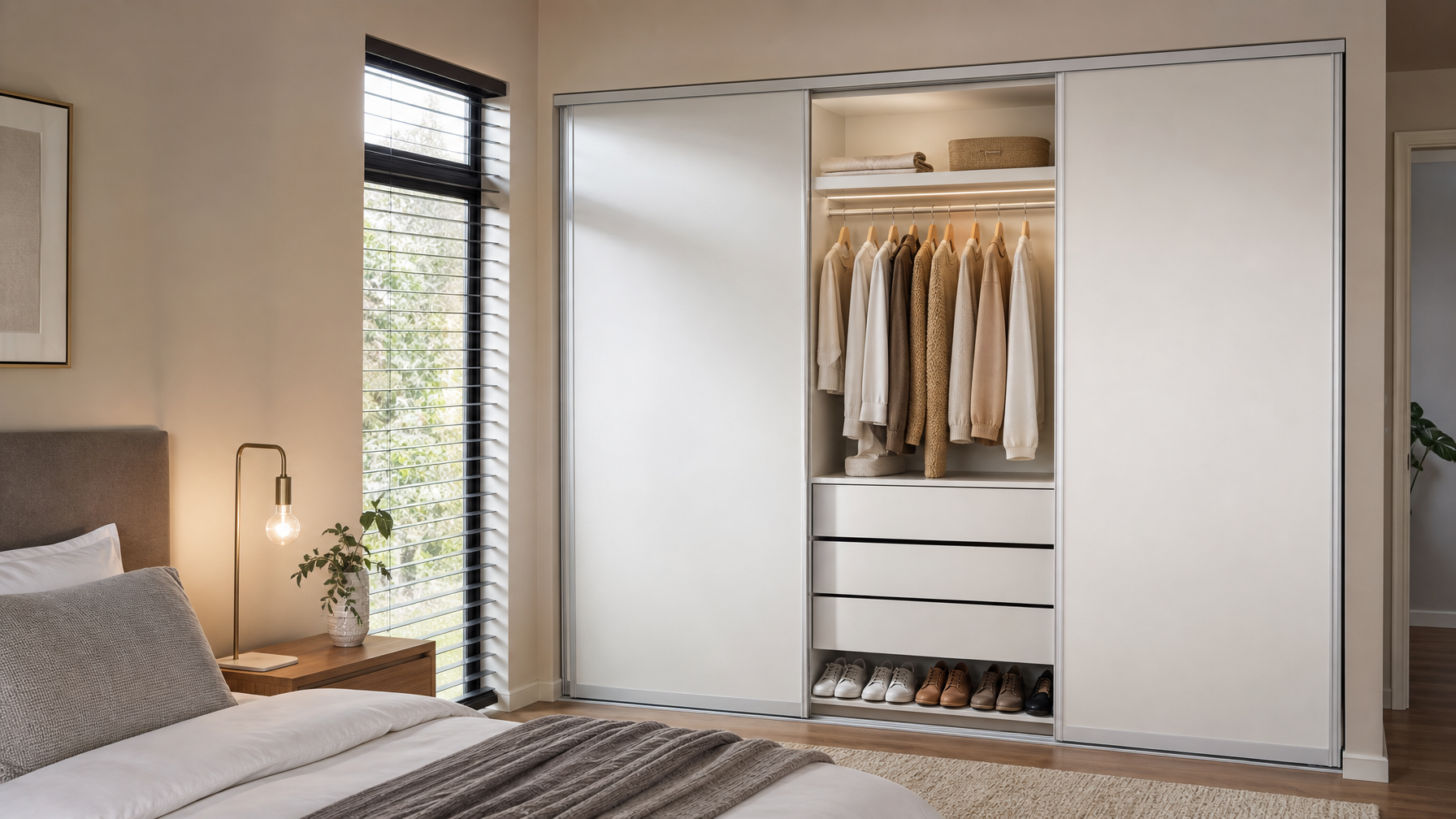
Sliding doors move along a track - one panel glides behind another rather than swinging out into the room. They're a popular choice in contemporary South African homes, particularly in apartments and smaller bedrooms.
Best for:
- Tight spaces where a swinging door would hit the bed or other furniture
- Modern, sleek aesthetics
- Larger wardrobes where two full-height panels create a dramatic, clean look
Watch out for:
- You can only access half the cupboard at a time
- Tracks accumulate dust and need regular cleaning
- Worn rollers can be costly to repair
Hinged Doors
The traditional swinging door opens outward from the cupboard. It's the most common door type in South African homes and the easiest to maintain.
Best for:
- Full access to all shelves and hanging space at once
- Rooms with enough floor space for the door to swing clear
- Smaller cupboard units (2 or 3 doors)
- Budget builds - hinges are cheap and easy to replace
The rule of thumb: If your bedroom is smaller than 10m², go sliding. If you have the space, hinged doors give you better access and lower long-term maintenance.
What Size Cupboard Do You Need for Your Bedroom?
Getting the sizing right before you buy saves a lot of frustration. Here's what to measure:
Standard Wardrobe Dimensions (South Africa)
- Depth: minimum 550mm–600mm for hanging clothes. Anything shallower and long garments will crumple.
- Width: standard units come in 600mm, 900mm, 1200mm, 1500mm and 1800mm widths. Most bedrooms work well with 1200mm–1800mm of total cupboard width.
- Height: floor-to-ceiling builds maximise storage. Standard freestanding units run from 1600mm to 2100mm tall.
How to Measure Your Room
- Measure the wall width where the cupboard will go - account for door swings and any obstructions like light switches.
- Check ceiling height, especially if going for a built-in or tall freestanding unit.
- Leave at least 600mm of floor space in front for comfortable access.
- For a double bedroom, budget for at least 1200mm of hanging space per person.
Interior Layout
Think about what you actually store before choosing a unit. A mix of hanging rail, shelves and a drawer or two covers most people's needs. If you have a lot of folded items, prioritise shelves. If you wear a lot of dresses or suits, prioritise long hanging space.
How Do You Maximise Storage in a Small South African Home?
Small homes are a reality for millions of South Africans, especially in cities. The good news: smart cupboard choices can transform how a compact space functions.
Go Vertical
The most underused space in any South African home is above eye level. Floor-to-ceiling units - or simply choosing the tallest freestanding storage cupboard that fits the room - can double your storage without taking up extra floor area. The Multi-Functional White Cabinet from Click Furniture stands 168cm tall with adjustable shelves and built-in wheels, making it genuinely versatile across any room in the house.
Choose Multi-Purpose Units
A single tall storage cupboard in a passage can serve as a linen cupboard, cleaning supply store and general overflow storage all at once. Units with adjustable shelves adapt to whatever you need to store this month versus next.
Use the Space Above Doorframes
A shallow shelf above a door frame adds surprising storage for items you don't reach for daily - seasonal bedding, rarely used appliances, books.
Think About Zones
Instead of one large cupboard crammed with everything, assign storage by zone: one unit near the entrance for shoes and bags, one in the bedroom for clothes, one in the kitchen for pantry items. Multiple well-placed freestanding units beat one overcrowded wardrobe.
Opt for Furniture That Does Double Duty
Ottomans with internal storage, beds with under-bed drawers, and benches with lift-up seats all add storage without eating into your cupboard budget.
Do Cupboards Add Value to Your Property?
Short answer: yes, particularly in the kitchen and bedroom.
Kitchen cabinetry consistently ranks among the highest-return renovation investments in South African property. According to the Seeff Property Group and the Rawson Property Group, updated kitchen and bathroom fixtures - including cupboards - are among the first things buyers notice during viewings. A tired, dated kitchen with worn cupboard doors can actively reduce buyer interest, while a clean, modern kitchen with fresh cabinetry creates an immediate positive impression.
The important caveat, as RE/MAX CEO Adrian Goslett notes, is that spending R100,000 on fitted cupboards doesn't add R100,000 to your sale price. The return depends on the broader value of your neighbourhood and property. For most South African homes, the sweet spot is practical, neutral-finish cabinetry that looks well-maintained rather than high-spec luxury fittings that overshoot the market.
Built-in bedroom cupboards also feature prominently in property listings and buyer wish-lists. A main bedroom with a fitted wardrobe photographs better, presents better, and simply feels more complete to a buyer walking through.
Shop Click Furniture's Cupboard and Storage Range
Ready to sort out your storage? Click Furniture's range covers everything from practical multi-purpose storage cabinets to modern modular kitchen units - all online with free nationwide delivery and the option to pay over two months.
Popular picks include:
- Bath51 Storage Cupboard (R2,250): 178cm tall with side exterior shelves and internal shelving - ideal for laundry rooms, garages, service areas and offices.
- Multi-Functional White Cabinet (R2,950): 168cm tall with adjustable shelves and wheels - a true all-rounder for any room.
- Kitchen Floor and Wall Units: Modular kitchen units in White-Oak and Graphite-Oak finishes from R1,500, designed for apartments, rental properties and compact spaces.
Browse the full cupboard and storage range at clickfurniture.co.za.
The Bottom Line
Choosing the right cupboard for your South African home doesn't have to be complicated. Know your budget, measure your space, pick the right material for your climate and lifestyle, and decide whether freestanding flexibility or built-in permanence suits your situation.
For most people, the answer sits somewhere in the middle: a couple of quality freestanding units that do exactly what's needed without contractor fees or waiting time. If your home needs more storage - and whose doesn't - start with the basics: a tall, versatile storage cupboard that works anywhere in the house. The rest follows naturally from there.